Element Bender: 30-second cinematic elemental VFX animation
By Sulat (sulat.com). Model: Kimi K3. Posted date unknown. Original post: https://element-bender.k3.demos.sulat.com/
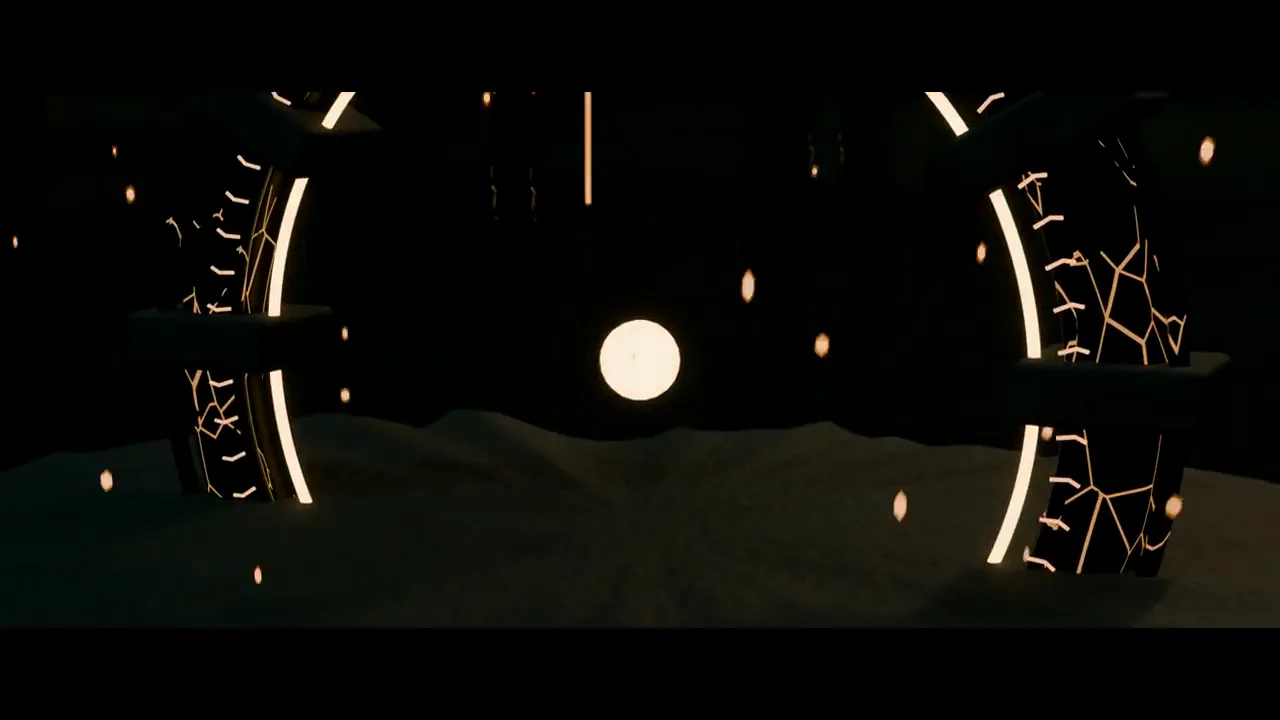
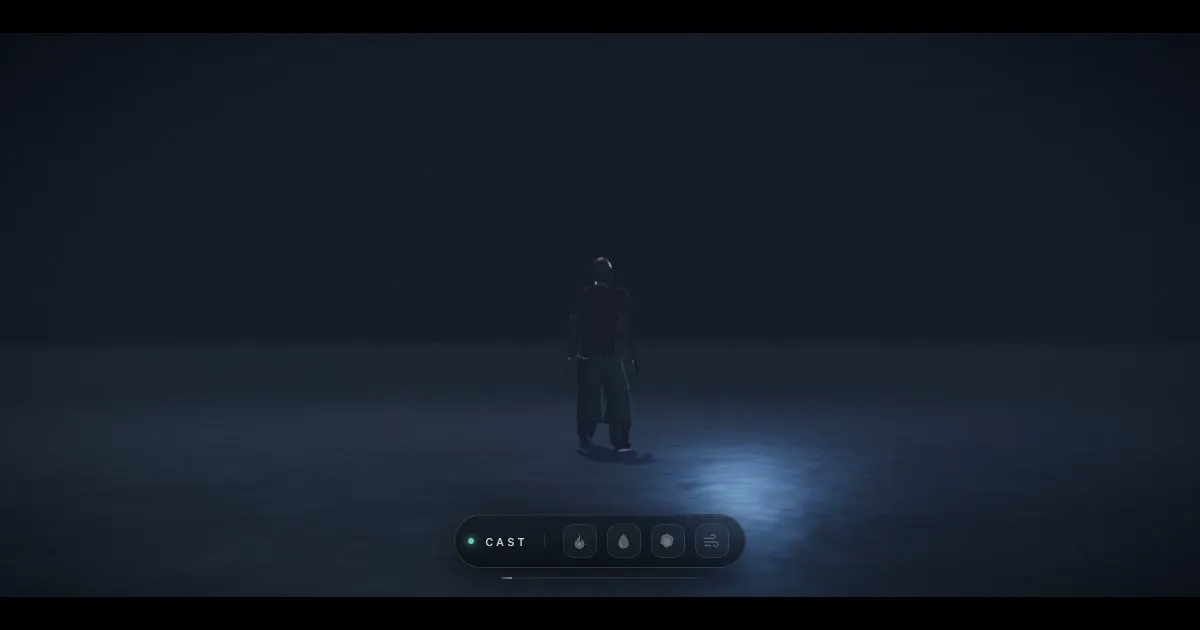
Create a highly detailed 30-second cinematic 3D CGI animation, playing in the browser, of a generic young martial artist — bald head, athletic build, simple red short-sleeved tunic, beige loose pants, and red boots, a completely original design with no tattoos, no logos, and no resemblance to any existing character — standing in a vast dark empty arena with a smooth black ground and soft volumetric lighting.

The character holds a dynamic ready stance. He draws a smooth glowing white curved path on the ground with his hand, and that path appears as a bright luminous spline traced across the floor. He then casts four elemental abilities in sequence, and each one rides exactly along the drawn path and detonates at its end.

Fire comes first: a roaring trail of intense orange-red flames, glowing embers, and sparks that follows the curve and explodes in a burst of fire and particles. Water follows: a fluid turquoise stream with bubbles, foam, and mist that surges along the path and crashes in a splash. Earth is third: floating jagged brown rocks and dirt debris that levitate and slam along the curve, cracking the ground on impact. Air closes the sequence: swirling white-blue wind ribbons, leaves, and dust that spiral tightly along the path and dissipate in a gust.

The camera orbits smoothly around the character throughout. Aim for ultra-realistic particle systems, GPU-style VFX, hand-written shader quality, a high frame rate, cinematic lighting, and a dark atmospheric background. A clean modern UI overlay is briefly visible at the bottom showing CAST mode and four elemental icons for Fire, Water, Earth, and Air. The target look is photorealistic 3D rendering at Unreal Engine or Three.js quality, with no watermarks and no text beyond that minimal CAST-mode overlay.

Make the whole thirty seconds read as one authored, continuously alive shot rather than four detached effect demos. The character's stance, weight shifts, arm gestures, and recovery should motivate each cast; the drawn spline should feel physically inscribed into the floor and should react as each element travels it; the ground, fog, and lighting should respond to every element with its own color, intensity, falloff, and settling behavior; and each detonation should leave believable aftermath — scorch and drifting embers, wetness and receding mist, fractured ground and settling dust, dissipating vortices — before the next element takes its turn. Give the transitions between elements, the quieter beats between casts, and the final settling of the arena the same care as the peaks.

Do not take shortcuts, substitute a cookie-cutter particle demo, or stop at a superficial approximation of these effects. This build has no token budget limit, so pursue the full depth of the piece: distinct hand-written shader work and simulation behavior per element rather than one recolored system, layered secondary detail such as embers, spray, chips, and debris, correct timing and anticipation in the character's motion, camera framing that stays deliberate and cinematic at every moment of the orbit, and smooth playback that holds a high frame rate. Keep refining the motion, materials, lighting, particles, impacts, aftermath, and overlay until the sequence reads as a finished cinematic rather than a technical test.